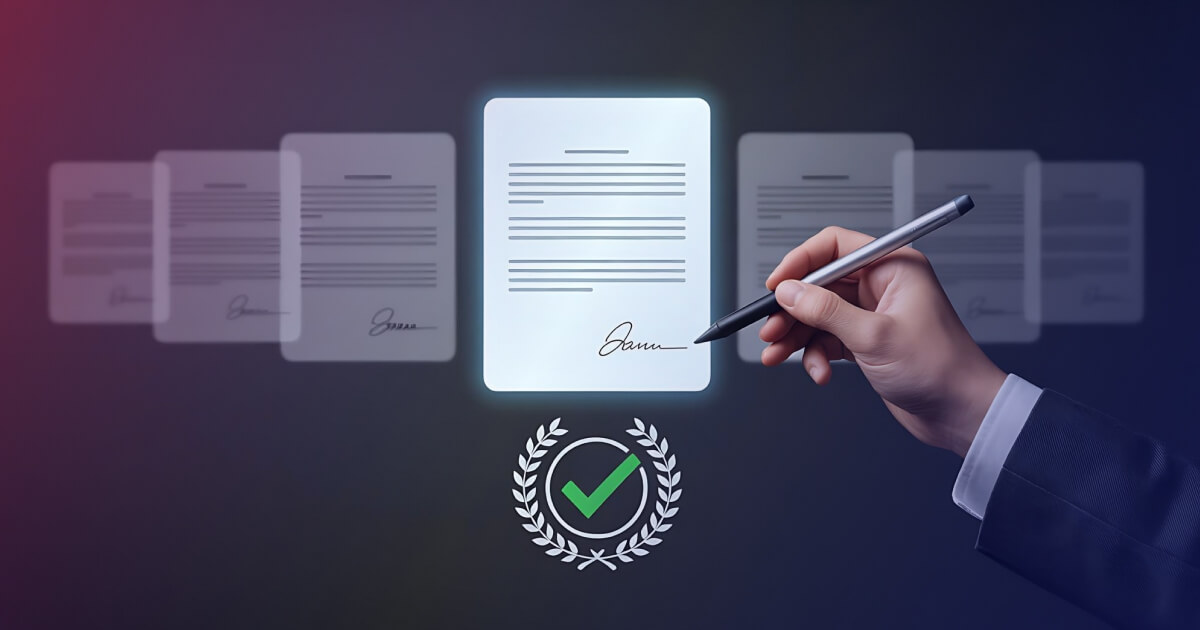
Picture this: a real estate agent finalising a deal from a beach vacation, or a lawyer getting a crucial binding contract signed right before a court deadline, but from their office, or picture yourself signing bank account documents or your Will from the comfort of your home. A few years ago, this might have seemed far-fetched. But today, we live in the fast-paced digital world of e-Signatures. And the transformation we all have witnessed and undergone is nothing short of legendary!
Remember the days when getting a signature meant chasing down busy executives, coordinating schedules, and dealing with heaps of paperwork? If you do, then you are showing your age, because the Gen Z in the workforce definitely won’t. They are used to a more sophisticated work culture where document signing is as easy as a click of a button, and as efficient as a caffeinated fairy. E-Signature tools have transformed the way businesses operate across different industries. In fact, a report by Forrester reveals that over 70% of businesses worldwide have adopted e-signatures to avoid unnecessary hassles. With e-signatures taking over at such a rapid pace, in this article, we examine the different types of documents commonly signed electronically, if only to showcase the fluidity and versatility of e-signatures that has adapted itself to multiple industries, scenarios and work environments.
So, without further delay: