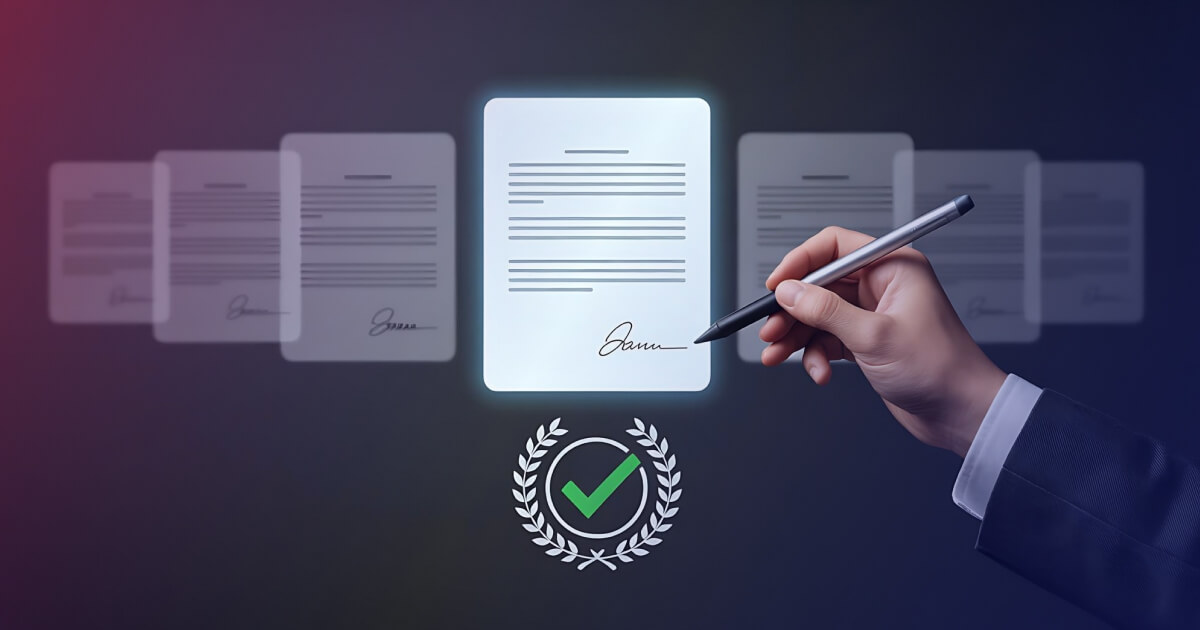
What is changing in e-signing today is not the tools themselves, but the threshold of trust we now expect from them.
Across digital ecosystems, signatures are no longer evaluated by how quickly they can be executed, but by how confidently they can be defended. Identity checks, real-time presence verification, and tamper-evident records are no longer viewed as advanced safeguards. They are increasingly understood as the minimum standard for digital transactions that matter.
This shift is already visible in the way digital services are designed and adopted across regions.
In the Middle East, where government-led digital identity initiatives and compliance-driven frameworks influence everything from corporate onboarding to public-sector workflows. e-Signing experiences are becoming more intentional by design. Transactions may carry a bit more nuance, but they also carry greater evidentiary weight. The emphasis has moved from frictionless execution to assured legitimacy – a trade-off institutions and regulators are actively choosing. Platforms are being built to align with these expectations rather than work around them. MySyn is one such example – designed to operate in environments where identity, presence, and long-term verifiability are assumed requirements, not optional enhancements.
In India, scale has always been the defining challenge. High-volume digital contracting demands systems that can move fast without weakening trust. The emerging baseline reflects this balance: processes that are seamless for users, yet structured enough to withstand regulatory review, contractual disputes, and long-term record retention. The experience feels simple on the surface, but the assurance underneath is anything but. MySyn’s approach reflects this balance – combining familiar e-signing flows with deeper verification and evidence preservation that can withstand scrutiny well beyond the moment of signing.
Across Botswana and South Africa, where digital services play a growing role in financial access, legal documentation, and enterprise participation, trust becomes the entry point rather than an afterthought. e-Signing experiences are evolving to make credibility visible, especially for first-time digital users. Platforms like MySyn, that are built around this new baseline, are helping ensure that digital participation feels dependable rather than provisional. The result is not just adoption, but confidence in the system itself.
What connects these regions is not uniform regulation or identical use cases, but a shared direction of travel – towards better credibility and trust. Digital transactions are being asked to do more than complete a task. They are being asked to hold up – across borders, across systems, and across time.
As this baseline takes hold, the experience of e-signing subtly changes. Users may not always see the mechanics at work, but they feel the difference. Documents feel final. Agreements feel harder to dispute. Digital actions feel closer in weight to their physical counterparts. This is what the next phase of e-signing looks like. Not louder. Not more complex. But quietly more credible – built for a world where digital agreements are no longer provisional, but permanent.