Electronic signing may feel borderless, but its legal treatment is anything but uniform. What counts as valid, reliable, or enforceable often depends on where the parties are located and which regulatory framework applies.
United Arab Emirates (UAE)
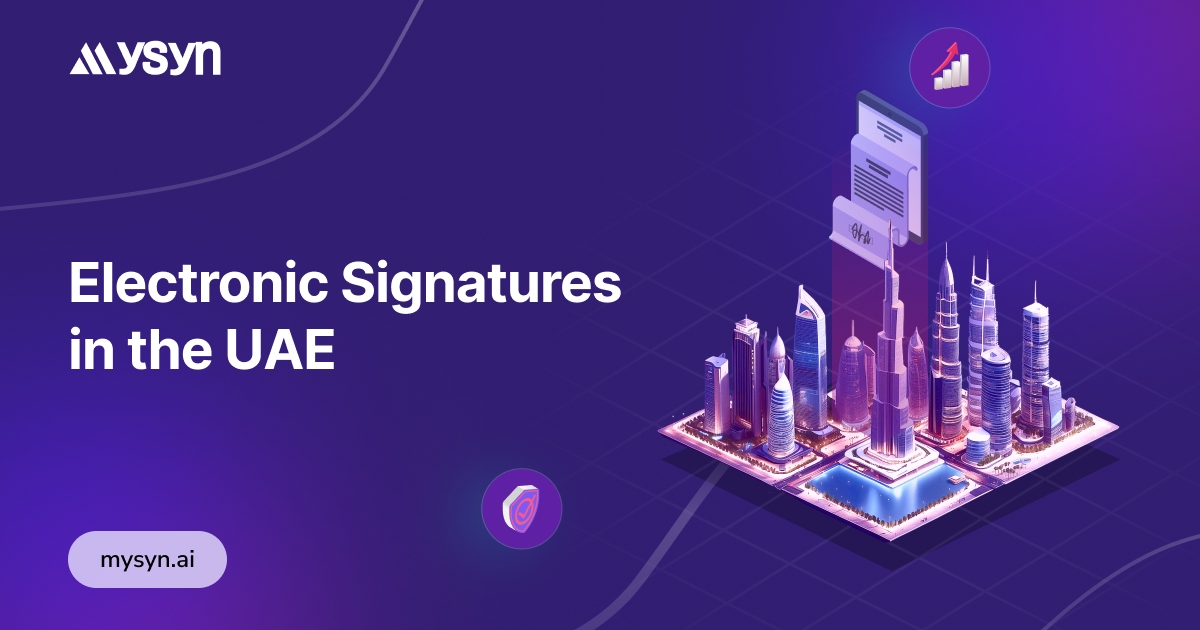
In recent years, the UAE has significantly updated its approach to electronic transactions. Through Federal Decree Law No. 46 of 2021 and the 2023 Executive Regulations, it has moved beyond the older 2006 framework and brought its laws in step with modern digital practices.
Put simply, electronic signatures and digital records are legally valid in the UAE, as long as they can be shown to be reliable and clearly linked to the person signing. The law also introduces a licensing system for ‘trust service providers’ – companies that create, verify, and preserve e-signatures, e-seals, and digital certificates. These providers are regulated by the Telecommunications and Digital Government Regulatory Authority (TDRA), which maintains an official trust mark.
As always, geography matters. Federal law applies onshore, while the DIFC and ADGM free zones follow their own electronic transactions laws. In practice, this means most routine commercial contracts can be signed using standard e-sign platforms. For higher-risk or more sensitive transactions, parties often rely on licensed providers or government-backed identities such as UAE PASS for stronger proof and security.
Recent reforms have also made courts more comfortable with electronic evidence – provided the digital trail is clear and systems are robust.
India
India’s approach to electronic signatures is built around the Information Technology Act, 2000, which gives legal recognition to digital records and signatures. Over time, this framework has evolved into a fairly structured system, especially around identity and authentication.
In practice, India draws a clear distinction between basic e-signatures and more secure digital signatures. Many high-value or regulated transactions rely on certificates issued by licensed Certifying Authorities and linked to national identity systems such as Aadhaar. This makes identity verification central to how electronic signing works in the country.
For everyday commercial agreements, simpler e-sign tools are widely used and accepted. However, in sectors such as banking, government contracting, and compliance-heavy industries, higher-assurance digital signatures are still preferred. Courts in India increasingly accept electronic evidence, but they tend to look closely at how the signature was created and whether the process can be reliably verified.
Overall, India offers a mature but compliance-driven environment, where convenience and regulation operate side by side.
Southern Africa
Across Southern Africa, electronic signing laws are steadily developing, with countries following similar core principles but at different levels of maturity.
In South Africa, electronic transactions are governed by the Electronic Communications and Transactions Act of 2002, which recognises electronic signatures and distinguishes between ordinary and ‘advanced’ electronic signatures. For most commercial contracts, standard e-sign tools are sufficient. More sensitive transactions, however, often require advanced signatures issued by accredited providers.
Botswana follows a similar approach under its Electronic Communications and Transactions Act of 2014. Electronic records and signatures are legally valid, provided their reliability and integrity can be demonstrated. While the ecosystem is smaller, acceptance of digital signing is steadily growing, especially in corporate and public-sector contexts.
Across the region, courts are becoming more comfortable with electronic evidence, but strong audit trails and secure systems remain essential. For businesses, this means e-signing is viable, but credibility and process quality matter greatly.
European Union
Within the European Union, electronic signatures are governed by the eIDAS Regulation, which creates a unified legal framework across member states. This makes the EU one of the most structured and predictable regions for digital signing.
Under eIDAS, three levels of signatures are recognised: simple, advanced, and qualified. While simple e-signatures work for many routine agreements, advanced and qualified signatures carry stronger legal weight and are often used for regulated or high-risk transactions.
From a market and adoption perspective, countries such as Germany, France, Netherlands, and Spain are leading the charge to digitisation. These markets combine high digital maturity, strong regulatory clarity, and widespread use of cloud-based legal and business platforms.
For most commercial use cases, platform-based e-signing is well accepted. For higher-assurance needs, qualified trust service providers play a central role. Courts across the EU generally uphold electronic signatures, as long as they meet eIDAS standards and are properly documented.